Transforming Latin America's supply chains: The role of Maersk Project Logistics
In a region as dynamic and diverse as Latin America, effective project logistics can be the key to success for complex businesses. As explained in the research, “Logistics market value in Latin America from 2019 to 2027” by Statista, The Latin American logistics market is poised for significant growth, with projections estimating that it will reach USD 784.60 billion by 2027, growing at a compound annual growth rate (CAGR) of 6.2% from 2020 to 2027. This growth is driven by infrastructural developments, government initiatives, the rise in international trade, and other socio-political factors. The increasing complexity of supply chains and the need for specialised logistics solutions highlight the importance of project logistics in this region. Maersk Project Logistics (MPL) redefines logistics solutions, bringing a unique combination of global expertise and local knowledge.
What is Maersk Project Logistics (MPL)?
Project logistics is a specialised segment within the global logistics industry that goes beyond traditional freight forwarding and transportation. It involves meticulous planning, transportation engineering, procurement, health, safety, security, environment and quality (HSSEQ) compliance, and contract and supplier management. MPL combines these elements to offer a comprehensive service that ensures all cargo converges at the destination site in the right sequence, in full, and on time.
MPL covers the entire spectrum of project-related logistics– from solution design and special cargo transportation to detailed planning and orchestration. Whether setting up a large-scale factory, installing solar panels across vast lands, constructing new infrastructure, or providing disaster relief, MPL's approach begins with the end state in mind and works backwards to ensure flawless execution.
How MPL operates globally
Globally, MPL employs a multi-modal approach, integrating ocean, air, and inland transportation to meet the unique demands of each project. The process begins with meticulous planning and orchestration. This includes identifying the best routes, securing the necessary permits, and coordinating with local authorities and partners. MPL’s global network, comprising over 100,000 Maersk colleagues in more than 130 countries, provides the local knowledge and global expertise required to handle diverse challenges.
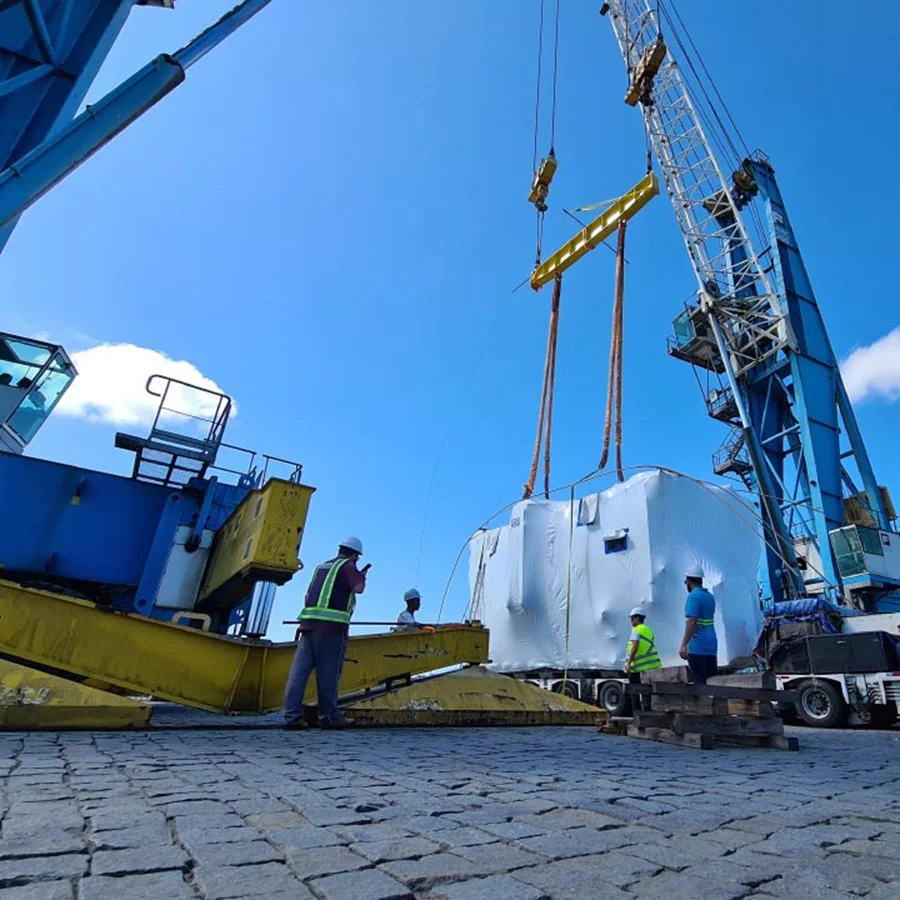
For instance, when transporting heavy or oversized cargo, MPL leverages specialised transport assets such as breakbulk vessels, ultra-heavy lift aircraft, and customised trailers and wagons. This asset-right approach combines owned and controlled assets with an extensive vendor network to maximise efficiency and control. Additionally, MPL’s commitment to HSSEQ standards ensures that all operations meet the highest safety and environmental benchmarks.